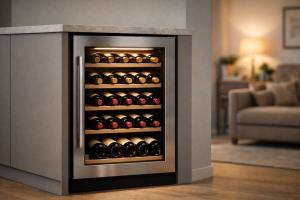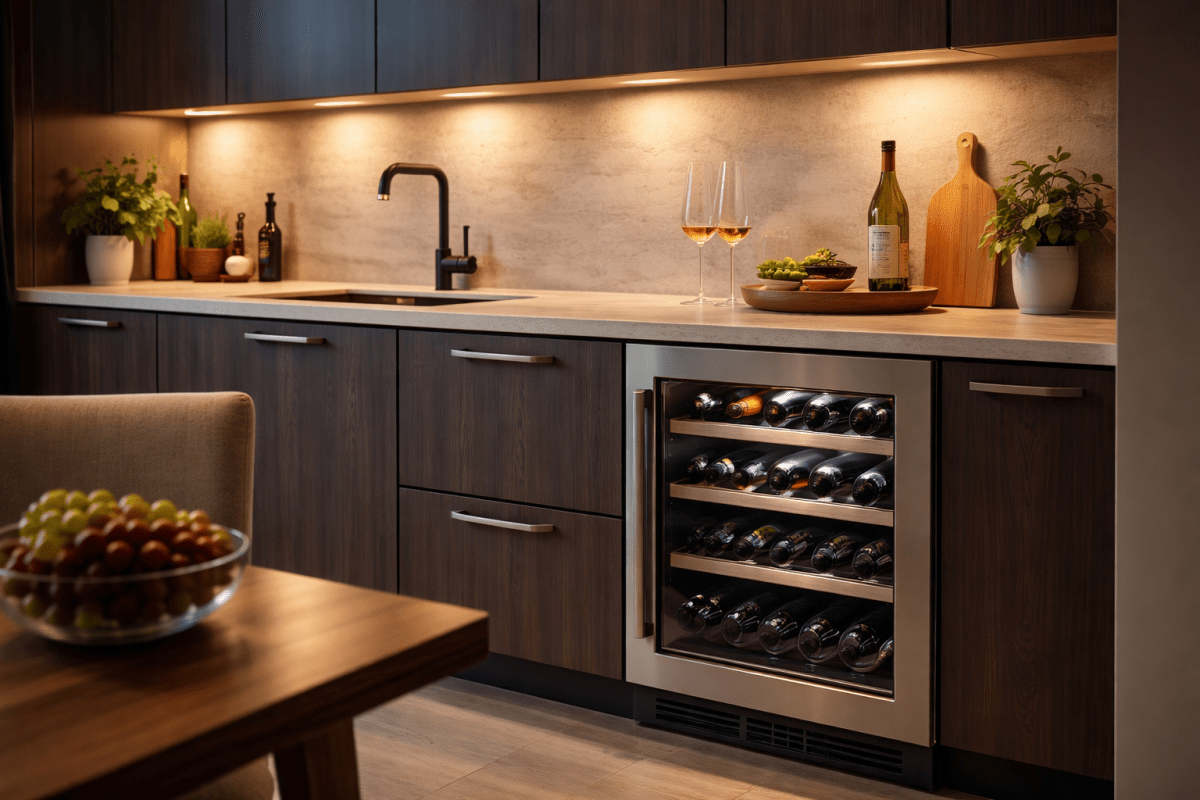
If you’re shopping for a wine fridge, one of the most important decisions isn’t the size or the brand — it’s the cooling system inside. Most wine coolers use one of two technologies: compressor cooling or thermoelectric cooling.
So which is better?
The answer depends on where you’ll place the fridge, how many bottles you want to store, and how stable you need the temperature to be. In this guide, we’ll break down the real differences between compressor and thermoelectric wine fridges in plain English, so you can choose the best option for your home.
How Compressor Wine Fridges Work
A compressor wine fridge works in a similar way to a standard kitchen refrigerator. It uses a compressor and refrigerant gas to remove heat from inside the cabinet and push it out through external vents.
This system is powerful and consistent, which is why compressor cooling is common in larger or premium wine fridges.
Main characteristics of compressor cooling
- Strong cooling performance even in warm rooms
- Better temperature stability over time
- Suitable for larger bottle capacities
- Works well in kitchens, garages, and utility rooms
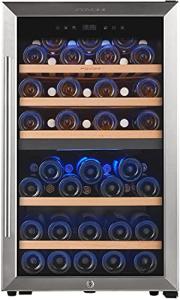
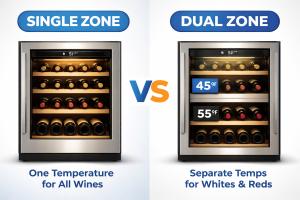
20" Compressor Wine Cooler - Dual Zone, 52 Bottles
Store your favorite wines at the perfect temperature with this spacious and stylish dual zone cooler
Product information
£898.19
Product Review Score
4.44 out of 5 stars
201 reviewsProduct links
How Thermoelectric Wine Fridges Work
A thermoelectric wine fridge uses an electronic cooling method called the Peltier effect. Instead of a compressor, it relies on a small electric module and fans to move heat away from the interior.
Thermoelectric wine coolers are often smaller, quieter, and best suited for lighter wine storage needs.
Main characteristics of thermoelectric cooling
- Quiet operation with minimal vibration
- Energy efficient in stable environments
- Best for small to medium wine collections
- More sensitive to room temperature changes
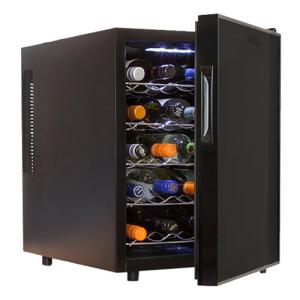
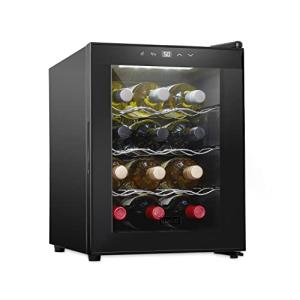
Black 20-Bottle Thermoelectric Wine Fridge for Home
Keep your favorite wines perfectly chilled and ready to enjoy with this stylish and spacious wine fridge
Product information
£209.30
Product Review Score
4.77 out of 5 stars
70 reviewsProduct links
Key Differences Between Compressor and Thermoelectric Wine Fridges
Let’s compare the two systems across the factors that matter most.
1. Cooling Performance
Compressor wine fridges are much better at handling warmer rooms. They can maintain low temperatures even if the surrounding environment is hot.
Thermoelectric wine fridges work best in climate-controlled indoor spaces. If the room gets too warm, their cooling ability drops significantly.
Winner:
Compressor (especially for kitchens or warm climates)
2. Noise Levels
Thermoelectric models are usually quieter because they don’t have a compressor motor cycling on and off.
Compressor models can produce more noticeable humming or vibration, although many modern units are still fairly quiet.
Winner:
Thermoelectric (for bedrooms, offices, or quiet spaces)
3. Vibration and Wine Aging
Vibration matters if you plan to store wine long-term. Excess vibration can disturb sediment in aging bottles.
Thermoelectric coolers tend to produce less vibration, making them a good choice for collectors storing wine for extended periods.
Winner:
Thermoelectric (for long-term aging in small collections)
4. Energy Efficiency
Thermoelectric wine fridges can be more energy efficient in stable room temperatures because they run smoothly without compressor cycles.
Compressor units may consume more power, especially larger models, but they also cool more effectively.
Winner:
Depends on environment — thermoelectric indoors, compressor in warmer spaces
5. Bottle Capacity and Size
Most larger wine fridges (30+ bottles) use compressor systems because thermoelectric cooling becomes less effective at higher capacities.
Thermoelectric models are most common in compact countertop or small undercounter units.
Winner:
Compressor for large storage
Which Type of Wine Fridge Is Best for Your Home?
Here’s a simple way to decide:
Choose a compressor wine fridge if:
- You want strong cooling performance
- The fridge will be placed in a warm kitchen or garage
- You need a larger capacity unit
- You want the most reliable temperature control
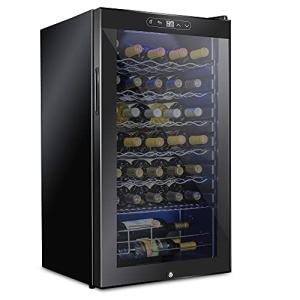
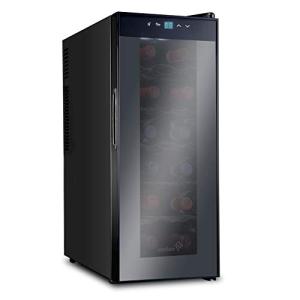
34-Bottle Compressor Wine Fridge with Lock
Keep your favorite bottles perfectly chilled and secure with this spacious 34-bottle wine fridge
Product information
£258.13
Product Review Score
4.73 out of 5 stars
178 reviewsProduct links
Choose a thermoelectric wine fridge if:
- You want quieter operation with minimal vibration
- You’re storing a small wine collection indoors
- The room temperature stays stable year-round
- You want an efficient compact cooler
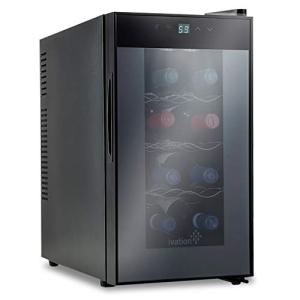
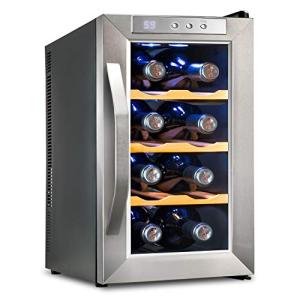
Ivation 8 Bottle Thermoelectric Wine Cooler with Display
Keep your favorite wines perfectly chilled and ready to enjoy with this sleek and compact wine cooler
Product information
£107.04
Product Review Score
4.44 out of 5 stars
200 reviewsProduct links
Pros and Cons Summary
Compressor Wine Fridge Pros
- Powerful cooling in all environments
- Best for larger wine collections
- Stable long-term temperature control
Compressor Wine Fridge Cons
- Can be noisier than thermoelectric models
- Slight vibration in some units
Thermoelectric Wine Fridge Pros
- Very quiet with low vibration
- Great for indoor countertop storage
- Efficient for small collections
Thermoelectric Wine Fridge Cons
- Cooling performance drops in warm rooms
- Not ideal for large capacity fridges
FAQ
Is a compressor wine fridge better than thermoelectric?
In most cases, yes — especially if you need strong cooling, larger capacity, or reliable performance in warmer rooms. Thermoelectric models are better for quiet indoor storage of small collections.
Do thermoelectric wine fridges work in kitchens?
They can, but only if the kitchen stays cool. In warm or open-plan kitchens, compressor models are usually the better choice.
Which is best for long-term wine aging?
Thermoelectric fridges produce less vibration, which can be helpful for long-term aging, but only if the temperature remains stable.
You can explore our full range of thermoelectric wine fridges to see how they perform in real-world use.
Final Verdict
If you want the most reliable and versatile option, a compressor wine fridge is usually the best choice. If you need a quiet, vibration-free cooler for a small indoor collection, a thermoelectric wine fridge can be a great fit.
Choosing the right cooling system will help protect your wine and ensure it’s always stored at the ideal temperature.